In Case of Emergency – ICE

August 24, 2012

Most of my blogs provide insights into how you can be better prepared to act in the event of an emergency situation.  This article has a little different spin.  It’s for times when you can’t help yourself and your care is totally in the hands of someone who doesn’t know you.   Let’s say you were incapacitated by an accident or illness while away from home and work.  You were by yourself, no friends, co-workers, or family members with you.  Would the first responders know who you would want them to contact?  Would they know if you had any medical conditions that could affect their decisions about your care?

Think it won’t happen to you?  The U.S. Centers for Disease Control and Prevention reported that in 2006 1,600,000 emergency room patients could not provide contact information because they were incapacitated.

Sure, your address and maybe home phone number should be available to them through the Department of Motor Vehicles with your car registration or your driver’s license.  That might be the best number to reach your loved ones; or it might not.

If you want your emergency care team (such as paramedics, firefighters, police officers, and hospital personnel) to have easy access to important information about you, there are several ways to make it available to them.

Medical alert bracelets and necklaces are key if you have life-threatening issues.

The low-tech, old fashion method of putting critical information in your wallet is a great way to provide whatever information you want first responders to have.

Another concept was developed by a British paramedic in the mid-2000’s – programming one or more ICE contacts in your cell phone.  Then, if your cell phone is with you, unlocked, and working, responders have access to information about who you would like called in case of an emergency.

Here’s how to ICE your cell phone:

  1. Choose a responsible person/people to be your emergency contact.  Select this person (or more than one person) wisely.  Select someone who could actually be helpful in an emergency situation.  If you think about it, some of your relatives and friends might not do so well getting a call that you’ve been badly injured.  A hysterical person could be more of a liability.  Others would be able to calmly provide helpful information and appropriately share information about your situation to others.
  2. Inform your ICE contact that you have designated them, and provide them with information that could affect your treatment.  This includes information on medicine you’re taking, allergies that you have (specifically to medicine and foods), and contact information for your doctors.  Also provide them with information about anyone else that you would like them to tell about your situation.
  3. Add this contact in your mobile phone contacts with the expression ICE before their name.  Such as ICE-Liz.  As they have time and the need for such info, first responders and hospital staff can readily find it.

Of course there’s no guarantee that your phone will be with you, available, found, working, unlocked, or that they’ll have time to use it.  But it’s one more tool to help communicate important information when you can’t do it yourself.  At a minimum, it will increase the chances that your critical medical information will be available to enhance the success of your emergency treatment.

And if you’re heard about scams related to using ICE, it’s a good idea to check out what Snopes says about the concept:  http://www.snopes.com/crime/prevent/icephone.asp

Programming an ICE contact in your phone only takes minutes, and it may save you or your loved ones hours of anguish in the event of an emergency.


Workshops Announcement – Mark Your Calendars, Anchorage!

August 23, 2012


Two More Ready Today emergency preparedness workshops are planned for Anchorage:

 – Wednesday, October 24, 6:00 – 8:00 p.m.

 – Saturday, October 27, 10:00 a.m. – noon

Location and other details to be posted soon.  Click “Follow me” to get more info as soon as it’s available. 

Pick the workshop that fits your schedule best.  You don’t want to miss this informative, interactive, and interesting workshop.  After just 2 hours, you’ll have already taken steps that will help your family to be more confortable and confident in handling “the next big one” of just about any description.  And with your family-specific action plan, as well as your new-found knowledge and inspiration, you’ll have a new attitude toward preparedness, making it more a way of life than a task.


One Mogul At A Time

July 8, 2012

One beautiful winter day when I was 18 and learning to downhill ski, my family went skiing with our neighbors, the McDonald’s. 

On one run, Mr. McDonald talked me through a challenging stretch of three or four moguls.  I was having fun and learning lots.  Then I turned a corner on the trail and stopped dead in my tracks, staring at the path ahead.

“What’s wrong?” Mr. McDonald asked.

Staring unblinking at the path in front of me, knowing there were no other options, I squeaked out, “I can’t do those moguls.”  I  was scared.

“Sure you can.  You did great on those moguls behind us.” 

How could he possibly think that I could get through that run, with moguls from here to the lodge? 

“No way.  That hill is solid moguls.  There are so many moguls.  And they’re so close together.” 

“Oh, I understand,” he said patiently.  Good, I thought.  He understands and will help me find another way down the mountain. Then he continued, “There ARE a lot of moguls, and you can do it.”

NO!  He doesn’t understand!  There is no way that I could ski down that mogul-filled path and survive.  I was filled with panic.  Out loud I just said, “No way.”

“Don’t look at the long path of moguls ahead of you, just look about 10 feet down the trail.  All you need to do is ski that next mogul,” pointing to a skimpy little one right in front of us.  “Once you’re past it, then ski the next mogul.  Then the next.  Then the next.  Just ski one mogul at a time, Jane.”

I did it.  I conquered that mountain one mogul at a time.  His wise advice got me through that day and many more in the years since.  Whenever I’ve felt overwhelmed by the magnitude of a challenge in front of me, I’ve heard Mr. McDonald’s reassuring voice say, “Just ski one mogul at a time, Jane.”

While getting your family better prepared for emergencies, you might feel overwhelmed, not know where to start, not think you’ll ever be able to accomplish it.  My best advice to you is from Mr. McDonald.  Keep the big picture in mind, but focus on the task at hand, one or two activities.  Then take on one or two more.  With each step you take, you will be better prepared.  Ski one mogul.  Then ski the next.  Then the next.  Ski one mogul at a time.

The same advice holds true during a crisis.  There likely will be a mogul-filled mountain of work to do.  It can feel overwhelming.  Take a deep breath and take it on one step at a time.  Keep the end point in mind, your family’s safety, security, and comfort.  Pick one of the most important tasks that needs to be done.  And focus on that one task.  Then focus on the next.  Then the next.  Ski one mogul.  Then ski the next.  Then the next.  Ski one mogul at a time.

Thanks Mr. McDonald!


Grilling Safety

July 7, 2012

Grills are fired up all around the country this time of year.  It’s one of the hallmarks of summer in the United States.  Just like kids running through sprinklers.  Also, using an outdoor grill can be a great way to cook when you have an interruption in the supply of electricity and/or natural gas.  

Whatever your reason for firing up the grill, note theses top five grilling safety tips.

Fire –  Fire is the most destructive force in the universe.  Be prepared.

  • Elect a “Fire Marshall”
  • Know the fuel source
  • Have  a fire extinguisher in the area
  • Know the location of a first aid kit in case of burns
  • As always, know the fire department phone number

Location – Keep the grill away from trees, your home, children, and pets.  Never grill in  unventilated areas or walkways or where kids may be playing.  Enforce a “kid-free zone.”

Food Safety – You are more likely to get food poisoning than you are to get the flu. The basic rules to avoid it are:

  • Suspect everything
  • Keep it covered
  • Keep it cool
  • Get it hot (cooked)
  • Use your head 

Gas Safety – Before starting a gas grill, check for normal wear and tear in the gas supply hoses or tubing – brittleness, leaks, and sharp bends.  Check tubes for any blockage from spiders, other insects, or food grease.  The number one cause of gas grill fires is an obstruction in the path of the fuel. 

At the first sign of problems, TURN OFF and DISCONNECT EVERYTHING.

Gas grills produce a great deal of heat that can melt through hoses, knobs, and other parts.  Assume everything is third-degree-burn hot!

Charcoal Safety – Charcoal grills are the cause of far more fires than gas grills. 

Lighting the charcoal is where many folks get into trouble, specially by adding lighter fluid to hot coals.  Never add charcoal starter fluid when coals or kindling have already been ignited.  Lighter fluid turns into a heavy gas at a relatively low temperature.  The fire may return to the fluid container and EXPLODE.  Never ever use gasoline.

Keep these tips in mind to help ensure that your next grilling event is safe and enjoyable.  Grill on!


Reality Check

June 29, 2012

“One cannot be prepared for something while secretly believing it will not happen.”

– Nelson Mandela


Cool Tip – Garage Doors

June 28, 2012

How do you unlock your house when you return home?  Many families rarely put a key in their front door lock.  Instead they push a button on their garage door opener, drive in, then walk through the garage-house door.  Reversing the process to go out into the world.  The garage door is often the main entrance to a home.

If you use this slick way to get vehicles, family members, groceries, and other car contents past the locked perimeter, then I’d suggest that you do the following:

  •  Learn how to manually release your garage door.  Garage door openers manufactured and installed in the U.S.since 1982 must have quick-release mechanisms on the trolley that allows the garage door to be disconnected from the garage door opener in the event of entrapment.  This site might help you:  http://www.ehow.com/how_5576113_unlock-automatic-garage-door.html
  • Have an alternative way to get into the house, could be as simple as making sure that you have keys to the front door.  Otherwise, you could be stuck out in the cold (or heat) if the power goes out or you lose your remote control or it malfunctions or . . . . . .

By the way, June is Garage Door Safety Month.   Read this blog for 10 garage door safety an security tips:  http://garagedoors.wordpress.com/2012/06/21/june-is-garage-door-safety-month-3/


At Your Bedside

May 26, 2012

Many people have emergency supplies in their homes, cars, schools, and offices.  Excellent!  How many of you have a bedside emergency supply kit?  A what?!  Yes, a small bedside packet of stuff could be very helpful in an emergency that happens while you’re sleeping.

Such kits can be simple, likely with just a few items.  Several recommended items to have very handy:

  • Flashlight – a must (see my post How Many Flashlights do You Have?)
  • Extra set of vehicle and house keys
  • Some sort of signal device such as a whistle or bell
  • Cell phone
  • Shoes or at least hard soled slippers

What esle might you need, given your family’s unique circumstances?  What might be tremendously useful to have at your fingertips in an emergency in the dark in the middle of the night?  Mine includes leashes.


Near-Home Reunion Location

May 20, 2012

Many families have home evacuation plans, including a means for each capable family member to escape from every room, as well as a plan to help any who can’t get out on their own.  Practicing such evacuations will make it second nature should the need arise and will help you to identify difficult-to-dump rooms and other challenges.  I’ll write more on all that in a future post.  For now I want you to think about what to do once you all dive out of the windows.

I heard a story about a family in Texas.  They taught their three young children the importance of getting out of the house quickly and under what situations they should evacuate.  They had drills where each family member, including the kids, practiced escaping from their bedrooms and from the family room.  Very impressive.

Then one night, the worst happened.  The parents were awakened by the shrieking smoke detector!  Smoke was billowing through the hallway!  They jumped out of their bedroom window, just as they had practiced, and ran to the front yard.  There they joined two of their three children.  It took the dad and a neighbor to hold back the mom, who wanted to go back in to rescue her youngest son, 6-year-old Johnny.  Fifteen long minutes later, a fireman spotted Johnny, who had been worrying about the rest of the family, alone in the backyard.  He too had climbed out of the window, just like they had practiced.  But no one had talked about what to do next.

Pick a reunion location near your house, a place for everyone to gather if you have to quickly evacuate.  The reunion location can be at your mailbox, under the big tree across the street, or any spot that everyone in the family can remember and easily get to.  Then, when you talk about your evacuation plan and when you practice it, take the next step, tell everyone to go to the reunion location.  Practice meeting there.
Had that Texas family included a reunion location in their family evacuation plan, they would not have had to suffer through that incredibly long 15-minute wait before knowing that all their family members were safe.


Cool Tip – The Half-of-a-Tank Rule

May 20, 2012

Have you ever run out of gas in your vehicle?   Have you ever worried that you didn’t have enough to get to the next gas station, but somehow limped in on fumes?  Unfortunately, I have.  Neither situation is any fun; very stressful.

What would have happened if on that low/no gas day, we’d had a truly emergency need to get somewhere?  What if we jump into the car to drive a family member to an urgent care facility, only to find out that a stop at the gas station is needed first?  “I know it hurts, honey.  Just hold your arm still while I fill up the tank.”

Or what if we needed to quickly evacuate the area (maybe for a wildfire or rising water or a chemical spill or . . . ).  We’d want to get on the highway as soon as possible, not get in line at the gas station.

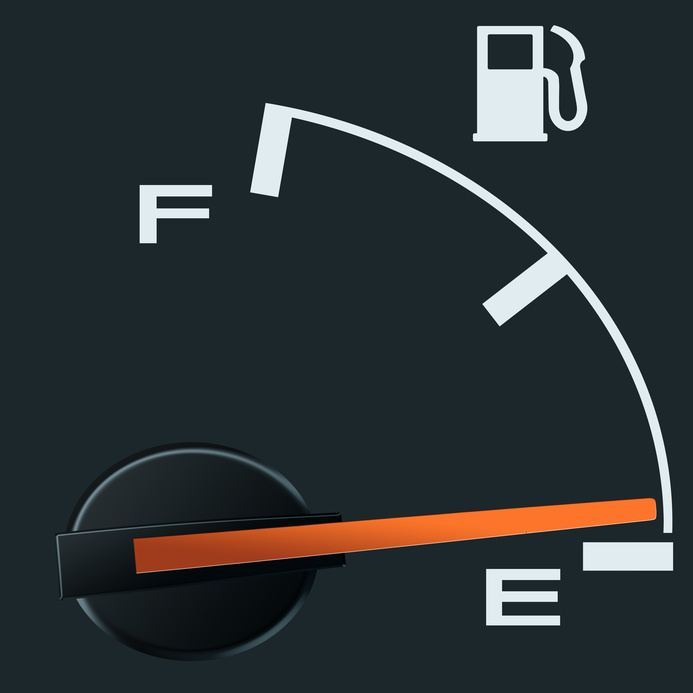
Some folks avoid such challenges by following the half-a-tank rule.  They don’t let their gasoline level drop below the half-full mark.  As it approaches the halfway point, they fill up.  Wise advice.  If that seems too stringent to you, maybe adhering to the quarter-tank-of-gas rule would work for you.  Same thing, except you don’t let your gas tank drop below the quarter tank level.

Until it becomes second nature, you can use visual clues, like a sticky on your dashboard that says simply “1/2” or “1/4.”  Or put a sticky arrow at the half or quarter tank mark on the gage.  Whatever works for you.  Just remember that one way to be more ready today is to ensure that you have sufficient fuel in  your vehicles for any urgent trips that you may need to take.

The Blues Brothers were glad that they had filled up:  http://www.youtube.com/watch?v=YHa_jqxnn4o. But then, they  were on a mission from God.  What mission might you be on?


STOP!

April 7, 2012

Pay attention to the emergency stop buttons and call-for-help options around you.  Once you become aware of them, you’ll start seeing them everywhere.  Everywhere there is moving equipment or moving fluids, there will be a way to stop it in a hurry.

Gas Stations.  Next time you fill your gas tank, look around for the big red, well-labeled emergency stop button.  If there were a fire or chance of a fire or a car hits a fuel pump or something else bad happens, anyone can hit the emergency stop button and the gas pumps will shut off.

Elevators.  While riding the elevator next time, take a look at the emergency phone or alarm button.  Read the instructions posted.  If you ride a particular set of elevators frequently, like at your apartment, place of work, take the time to get very familiar with it.  Maybe invite the landlord or building security or elevator supplier to come to an office safety meeting to explain just how it all works.  If you’re ever trapped in a stuck dark elevator, you’ll be glad you did.

Escalators.  At the top and bottom of the escalator, you’ll find a large red button.  Typically, there’s an alarmed transparent plastic guardplate over the button.  If someone falls on the elevator or gets caught in it, immediately lift the plastic guardplate and press the button.  Don’t try to free the the person while the elevator is moving.  That could lead to you and maybe others getting hurt, too.  Alarms will likely call building security or maintenance.  Once the situation has been resolved, restarting the elevator requires them turning a key.